Creative practice can sustain researchers without diminishing science
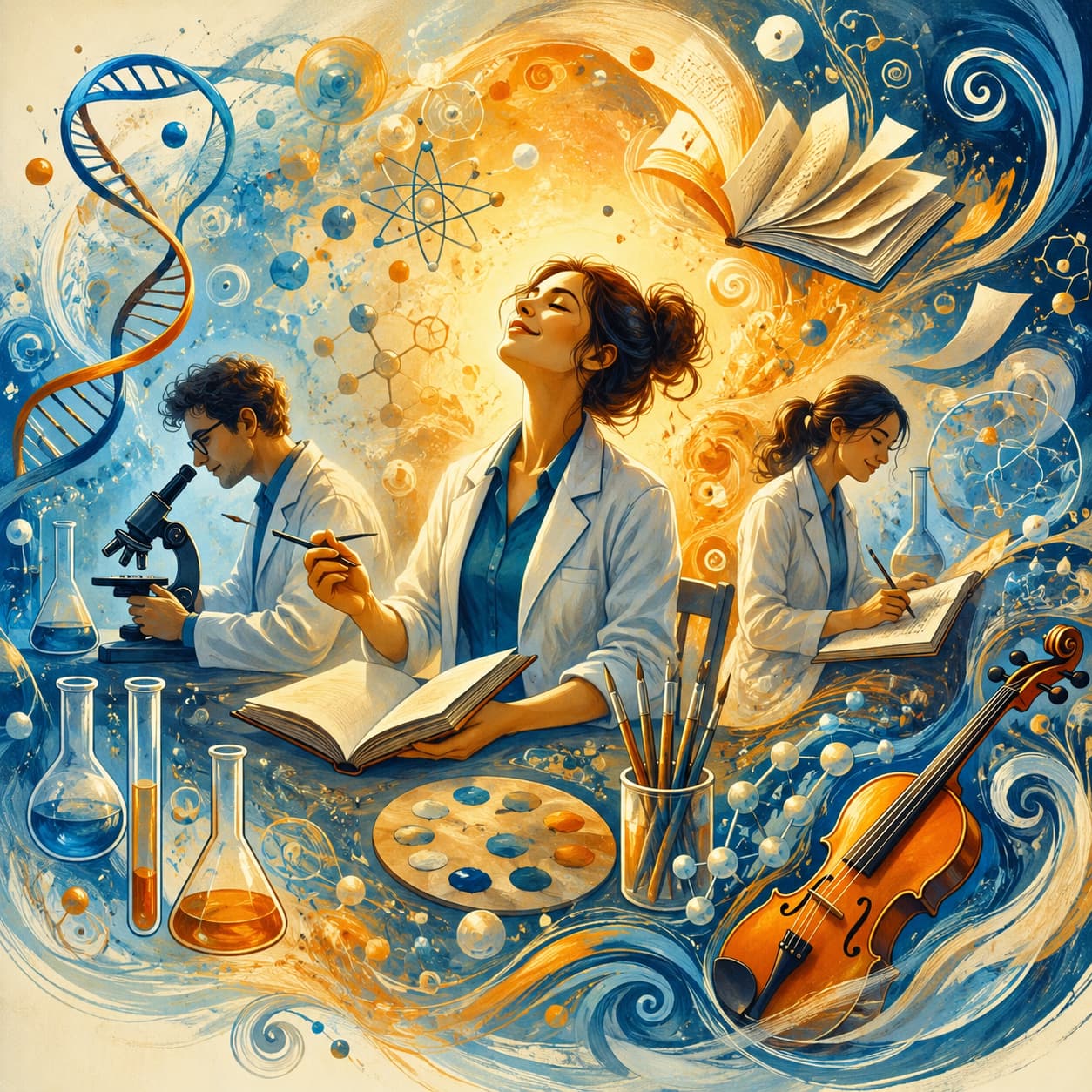
Is engagement with literature and the arts a distraction from scientific careers, or can it help sustain them? In academia, creative practices —such as writing fiction, making music, painting, photography or participating in the performing arts— are often seen as peripheral activities, separate from scientific performance. Yet many researchers practise them and integrate them into their personal and professional lives.
This study examines whether engagement in literary and artistic practices is associated with higher researcher happiness, and whether it comes at a cost in terms of subsequent scientific production or impact. The results show that broader engagement in literature and the arts is associated with greater happiness, with no evidence of lower publication output or citation impact. The article also introduces the idea of science–art balance, distinguishing between positive experiences of integration and negative experiences of tension or conflict between the two domains.
Key findings:
- Researchers who engage in a broader range of literary and artistic practices tend to report higher levels of happiness.
- Literature and the arts are not associated with lower subsequent scientific performance, either in publication output or citation impact.
- How the relationship between science and art is experienced matters: when the two domains are perceived as compatible, they may reinforce well-being; when they are perceived as conflicting, their benefits are reduced.
How can academic institutions recognise creative practices as part of happier, more sustainable research careers that remain fully compatible with scientific excellence?
Joaquín M. Azagra-Caro (2026). Literary and artistic practices, higher researcher happiness, and no lower scientific performance. Science and Public Policy, scag063.